
This article is from: srnnews.com
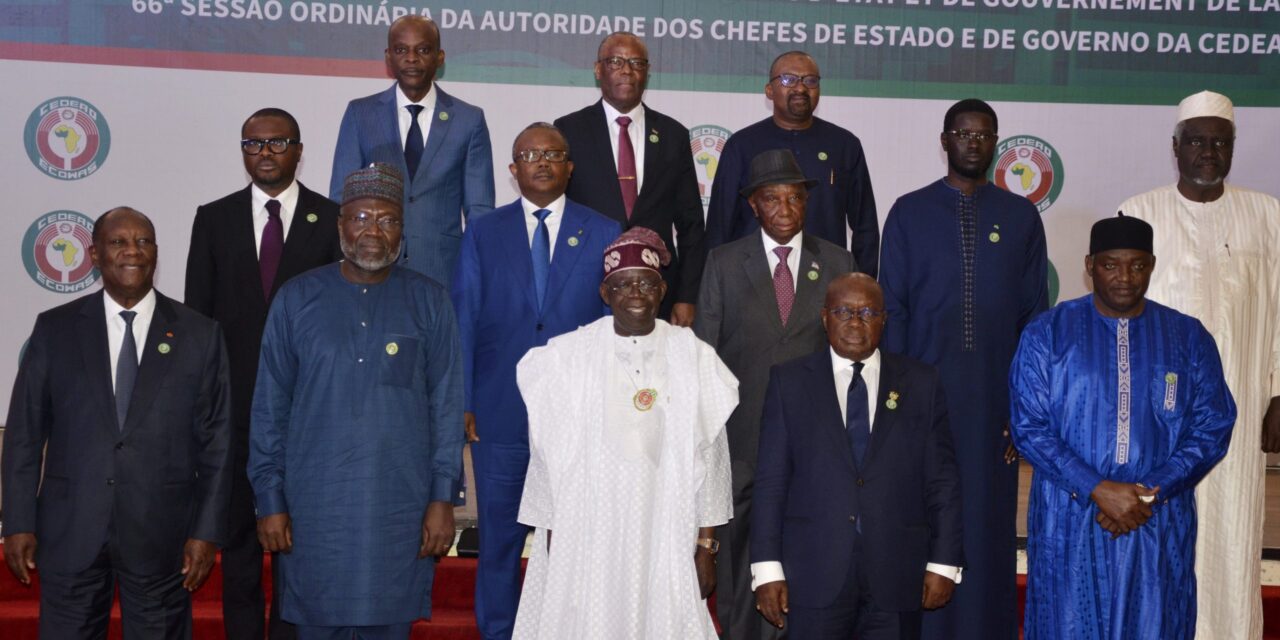
ABUJA, Nigeria (AP) — West Africa’s regional bloc ECOWAS approved Sunday an exit timeline for three coup-hit nations after a nearly yearlong process of mediation to avert the unprecedented disintegration of the grouping.
In a first in the 15-nation bloc’s nearly 50 years of existence, the military juntas of Niger, Mali and Burkina Faso announced in January that they decided to leave ECOWAS, accusing it of “inhumane and irresponsible” coup-related sanctions and of failing to help them solve their internal security crises.
“The authority decides to set the period from 29 January, 2025 to 29 July 2025 as a transitional period and to keep ECOWAS doors open to the three countries during the transition period,” ECOWAS Commission President Omar Alieu Touray said in his closing remarks Sunday at the summit of regional heads of state in Nigeria’s capital, Abuja.
The three coup-hit countries have largely rebuffed ECOWAS’ efforts to reverse their withdrawal. They have started to consider how to issue travel documents separately from ECOWAS and are forming their own alliance. The one-year notice for their departure is expected to be completed in January.
Touray commended efforts by the bloc’s envoys to resolve the crisis. “These efforts underscore your collective commitment to preserving peace and unity in our region,” he said.
Bola Tinubu, the president of Nigeria and chairman of ECOWAS, said the challenges faced around the world and in the region test its ability to work together. “We must not lose sight of our fundamental responsibility, which is to protect our citizens and create an enabling environment where they can prosper,” he said.
One major benefit of being a member of ECOWAS is visa-free movement to member states, and it is not clear how that could change after the three countries leave the bloc. Asked about such an implication in July, the ECOWAS commission president said: “When you get out of an agreement … if it is about free trade, free movement of people, the risk of losing those concessions remains.”
On Saturday, the three countries said in a joint statement that while access to their territories would remain visa-free for other West African citizens, they “reserve the right … to refuse entry to any ECOWAS national falling into the category of inadmissible immigrants.”
As West Africa’s top political authority since it was formed in 1975, such a division is ECOWAS’ biggest challenge since inception, said Babacar Ndiaye, senior fellow with the Senegal-based Timbuktu Institute for Peace Studies.
The chances of ECOWAS getting the three countries back into their fold are slim mostly because the bloc wants a quick return to democracy, which the juntas have not committed to, said Mucahid Durmaz, a senior analyst at global risk consultancy Verisk Maplecroft. Allowing the juntas to remain in power “could risk further regional fragmentation” while recognizing them as legitimate authorities would represent “a serious departure from ECOWAS’s founding principles,” Durmaz said.
The regional bloc also failed to manage the situation in the best possible way, he said.
“The bloc’s inconsistent responses to coups in the region have given an impression that its stance is influenced more by the political ambitions of member states than by its founding principles of promoting democratic governance,” Durmaz said.
___
Associated Press journalist Baba Ahmed in Bamako, Mali, contributed.
Brought to you by www.srnnews.com